Make a map of activities
Draw a simple plan and mark where the room’s activities actually happen. A living room may contain a reading chair, a television, a dining corner and a route to the balcony. Calling all of that “general lighting” hides the differences. Reading needs light on a page; watching a screen needs reflection control; moving between rooms needs comfortable visibility.
Record who uses each area and when. Someone working late may need a local light that does not illuminate a sleeping household. A person with reduced vision may need a different balance of task brightness, contrast and glare control. Give an AI system these practical needs without uploading names, health records or identifying family photographs.
Read a living room in three directions
Look down at the task, ahead at the room and across towards bright sources. A lamp can light a book well while its exposed bulb feels uncomfortable at eye level. Similarly, a ceiling fitting may produce plenty of light on the floor but leave faces and vertical surfaces looking flat. Ask for an explanation of where useful light will land.
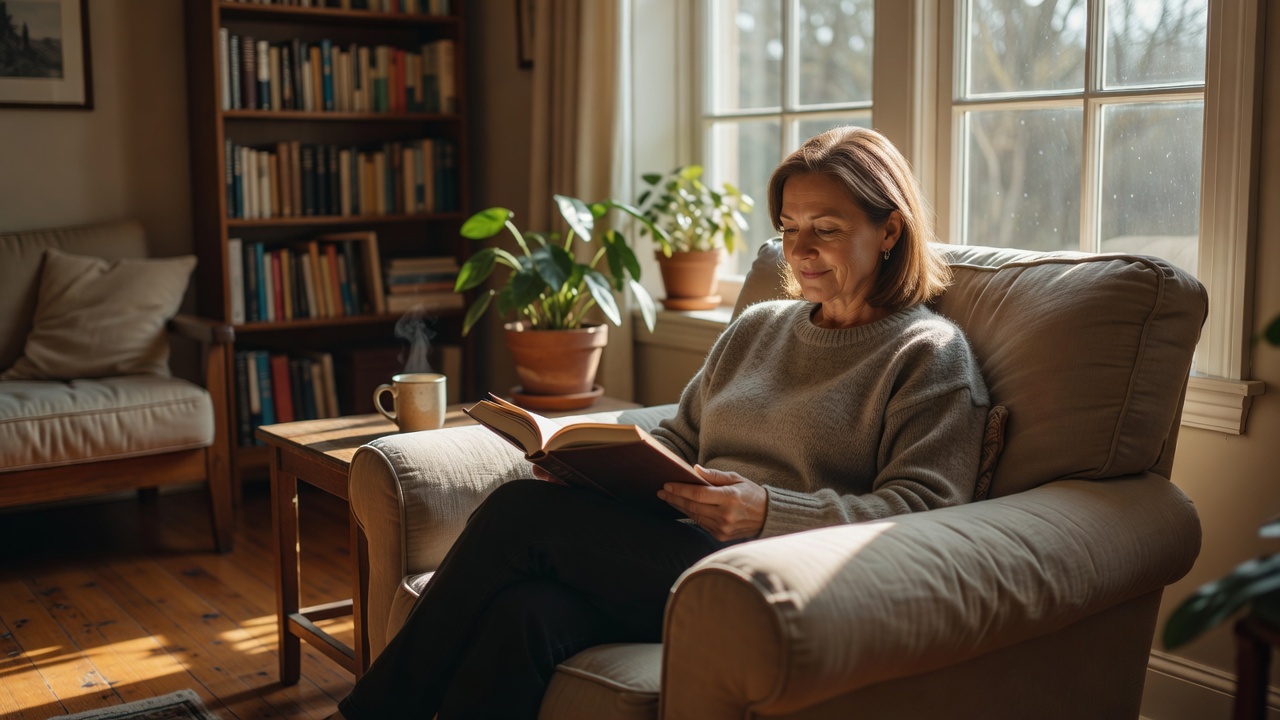
For a first experiment, describe the reading chair’s location, the likely position of the lamp and whether the reader is left- or right-handed. These details help identify possible shadows, although they cannot establish a guaranteed result. Keep the television’s position in the brief so proposed fittings can be checked for reflections from the actual seat.
Separate kitchen preparation from atmosphere
A kitchen is not just an attractive island under matching pendants. List the chopping board, sink, hob, storage and eating area separately. Consider whether your body blocks a ceiling light when you face the worktop. An under-cabinet source may help in one arrangement, while open shelving or a reflective splashback changes the options.
Tell the model about cabinet depth, worktop finish and appliance positions. Do not let it infer electrical routes from a photograph. Proposed installation near water or heat needs a competent local professional to check the relevant requirements. In Germany, the VDE framework and applicable DIN VDE installation standards matter more than an image generator’s confidence.
Give a workspace a viewing direction
For a home desk, map the window in relation to the screen rather than merely saying the room is south-facing. A window behind the user can reflect in the display; one directly ahead can create a difficult brightness contrast. Blinds, desk orientation and adjustable local lighting may be more useful than adding another overhead source.
The German Federal Institute for Occupational Safety and Health, BAuA, publishes workplace guidance. ASR A3.4 addresses lighting in workplaces, while DIN EN 12464-1 concerns indoor workplace lighting. These references provide context, not a universal prescription for every domestic desk. Whether a workplace rule applies depends on the actual use and legal circumstances.
Observe daylight at more than one moment
Visit each task area in the morning, around midday and after dark when practical. Note direct sun, sky brightness, shading from nearby buildings and the effect of curtains. A cloudy observation in Berlin cannot predict every summer evening. Record the date and weather alongside any phone reading, and treat the phone as a rough comparison tool rather than a calibrated instrument.
Describe surfaces as well as windows. A dark ceiling, timber wall or glossy stone counter can change distribution and reflections. If you do not know reflectance values, say so. “Matte pale wall, exact reflectance unknown” is a more useful input than an invented percentage that makes a calculation look precise.
Turn observations into a bounded request
A good room brief ends with a small set of priorities: keep the existing ceiling point, improve reading comfort, avoid screen reflections and retain an easy evening scene. Ask for two arrangements and their trade-offs. Request a separate list of assumptions and information still needed before buying anything.
The Chartered Institution of Building Services Engineers, CIBSE, and the Society of Light and Lighting, SLL, are useful starting points for deeper lighting guidance. Their work helps distinguish visual comfort from decorative fashion. Your next step is not to memorise every standard: it is to make each proposed light answer a clear room need.